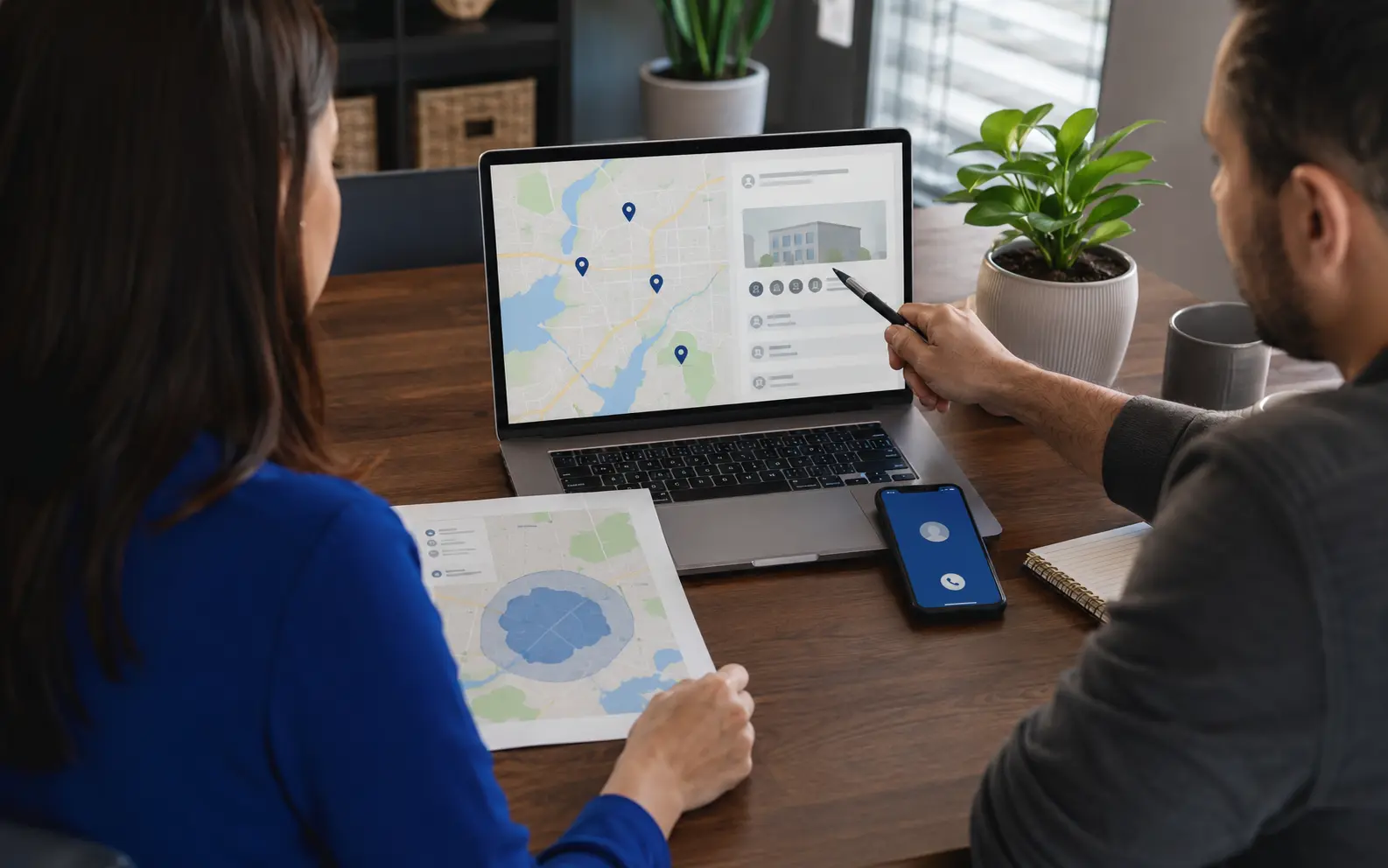
Treat the profile and website as one system.
Google compares the information on your profile with signals across your website and the broader web. Categories, services, business details, service areas, and landing-page content should tell one consistent story.
The profile cannot compensate for a weak website indefinitely. The strongest local presence connects a complete profile to focused service pages, relevant proof, and a clear conversion path.
Choose categories around the core business.
The primary category should represent the business model customers are actually hiring. Secondary categories can support legitimate services, but adding unrelated options can weaken clarity.
- Use the most accurate primary category
- Add only services the business actively provides
- Keep names, phone numbers, hours, and addresses consistent
- Link to the most relevant website destination
Build reviews that help customers decide.
Review volume matters, but the details inside reviews also build confidence. Encourage customers to describe the service, outcome, and location naturally—without giving them a keyword script.
Respond consistently and professionally. The goal is to demonstrate that the business listens, resolves concerns, and values its customers.
Use photos and posts as current evidence.
Recent original photos demonstrate active operations. Project images, teams, equipment, completed work, and recognizable service areas are more credible than generic stock imagery.
Posts can reinforce offers, seasonal priorities, customer education, and important updates. They support the profile, but they do not replace service-page authority or reviews.
Track real profile actions.
Use tagged website links, call tracking where appropriate, and conversion measurement to understand what the profile produces. Direction requests and website clicks are useful; qualified calls and booked work are better.
Build local landing pages that support the profile.
The website link should lead to a page that confirms the service, market, proof, and next step promised by the listing. A generic homepage can work for a single-location company, but a focused service or location page is often more useful when the query is specific.
Avoid cloning the same city paragraph across dozens of URLs. A useful local page should include relevant services, local operating context, nearby proof, customer questions, and a clear way to call or request an estimate.
Use a monthly optimization rhythm.
Check accuracy, new reviews, customer questions, photo freshness, primary actions, and website conversion each month. Compare performance with seasonality and service capacity so the profile supports the work the business most wants to win.
- Add recent original project and team photos
- Respond to every legitimate review
- Verify hours, services, links, and conversion tracking
- Review which search themes produce qualified calls
Common questions
How often should a Google Business Profile be updated?
Review core information monthly and whenever hours, services, locations, or contact details change. Add fresh photos and respond to reviews consistently.
Do Google Business Profile posts improve rankings?
Posts can reinforce relevance and give customers current information, but they are not a substitute for accurate categories, reviews, website authority, and proximity.
How do I rank higher in the Google Maps local pack?
Improve relevance, distance coverage where the business legitimately operates, and prominence through a complete profile, aligned website, strong reviews, local authority, and a good customer experience.
What photos should a local service business upload?
Use original team, vehicle, equipment, project, before-and-after, facility, and community photos. They should accurately show the business customers will hire.